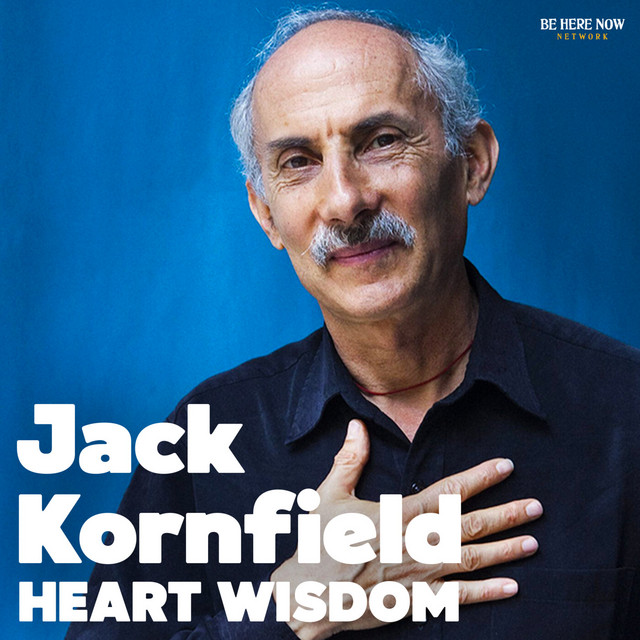
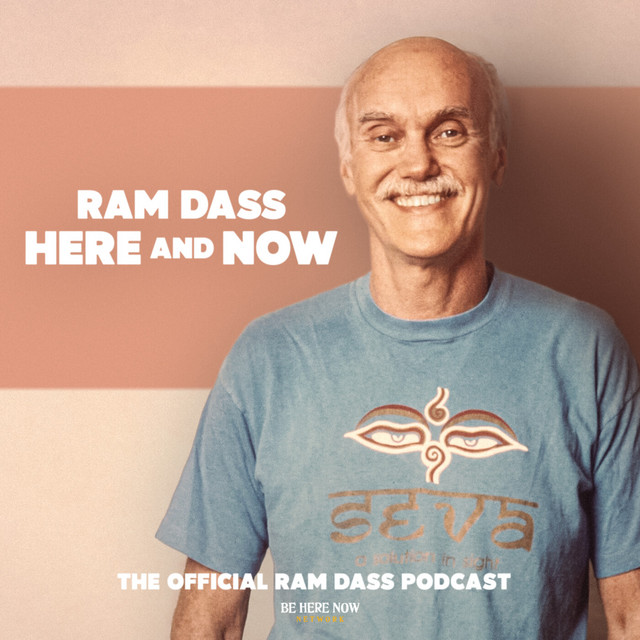
In this 1992 dharma talk, Jack Kornfield recounts his transformative apprenticeship with Thai meditation master Ajahn Chah and articulates a central spiritual challenge: the gap between sudden awakening experiences and the gradual, embodied work of integrating those insights into genuine authenticity. Kornfield explores how initial meditation breakthroughs often bypass the body, emotions, and relational dimensions of being human—and why returning to these places through therapy, bodywork, marriage, and community becomes essential to true liberation. The talk weaves together Kornfield's personal journey, encounters with figures like Ramana Maharshi and Ram Dass, and practical wisdom about matching inner realization with outer conduct.
What Does It Mean to Rest in Your Buddha Nature?
Kornfield opens by describing what it felt like to be in the presence of Ajahn Chah, the revered Thai forest monk who became his primary teacher. He characterizes Ajahn Chah as someone who had achieved a profound settledness—a quality Kornfield captures in the image of a great tree rooted in the earth. This rootedness was not merely intellectual knowledge of Buddhist philosophy, but a palpable presence: "Being with Ajahn Chah was being with a person who rested in their Buddha Nature, their own true nature. He was just himself. He was really at peace with himself. You could feel it from the energy of his presence, rooted like a great tree in the earth."
What Kornfield emphasizes here is that Ajahn Chah's authority did not come from accumulation of techniques or doctrinal mastery, but from an embodied alignment with what Buddhist teaching calls "one's own true nature." The teacher was not performing wisdom or managing an image; he simply was present, undefended, and complete. This quality—Ajahn Chah's "roundedness, freedom, and openness"—became Kornfield's implicit teaching: that authentic spirituality is not achieved through subtle techniques alone but through an integration so thorough that one's presence itself communicates peace.
The Gap Between Sudden Awakening and Embodied Integration
A central theme of Kornfield's talk is the distinction between sudden awakening experiences and the gradual, often humbling work of bringing those insights into the body and into relationship. Many Western meditators, Kornfield suggests, have powerful transcendent experiences—moments of profound freedom, bliss, or dissolution of the separate self. Yet these experiences can coexist with unintegrated anger, fear, sexual confusion, and relational dysfunction. The mystical moment is real, but it has not necessarily touched the nervous system, the emotional body, or the patterns of conditioning that animate daily life.
Kornfield describes needing to "work his way down the chakras" to fully live this human life. This is not poetic metaphor but a practical acknowledgment: spiritual realization that stays locked in the head or in transcendent states misses the embodied work of becoming whole. The belly, the heart, the genitals, the legs—these dimensions of human existence do not dissolve when one experiences non-dual awareness. They remain, and they require their own attention, their own compassion, their own integration.
How Does Therapy and Bodywork Serve the Spiritual Path?
Rather than dismissing psychological work as a distraction from "higher" pursuits, Kornfield speaks of therapy, bodywork, marriage, and family as genuinely transformative. These are not consolation prizes for those who cannot meditate; they are essential aspects of genuine liberation. A person may glimpse the formless, timeless dimension of consciousness in deep meditation and simultaneously carry unhealed wounds, defensive patterns, and unlived aspects of humanity. The work of psychological integration—naming pain, grieving loss, learning to set boundaries, experiencing one's own anger or sexuality—becomes spiritual practice when approached with mindfulness and authenticity.
The quality of presence that Kornfield associates with Ram Dass and his own teacher Ajahn Chah is not achieved by transcending the human dimension but by inhabiting it fully and compassionately. Presence, in this sense, means showing up with awareness in the therapy room, in the marriage, in the difficult family conversation. It means meeting one's own shadow and the other person's shadow with the same tenderness one brings to meditation.
What Is the Difference Between Matching Thoughts to Values and Living Authentically?
Kornfield speaks directly to the challenge of alignment: "Matching our thoughts and actions with our values." This is not a high spiritual attainment but a fundamental ethical act, and one that many practitioners neglect. A meditator may cultivate compassion in formal practice while acting with carelessness or aggression in daily life. The teaching is not to judge this harshly but to notice it with honesty. Real integration means that the values discovered in meditation—kindness, non-harm, truth—actually show up in how one treats a partner, manages money, or responds to conflict.
Authenticity, in Kornfield's framing, is not a matter of emotional expressiveness or unbridled self-assertion. It is the alignment of inner realization with outer conduct, inner truth with relational honesty. It is the opposite of spiritual bypassing—the use of meditation or philosophy to avoid the difficult, messy, human work of change. To love another person just as they are, Kornfield teaches, "is the only kind of love that makes any sense." But this requires that we ourselves be willing to be seen, known, and changed by the other. It requires vulnerability, not transcendence.
What Role Does Rapture Play in Early Meditation Practice?
Kornfield recalls his first experience of rapture (what Buddhist texts call piti) in meditation—a state of profound joy, ease, and light that arises when the mind settles and the body relaxes into meditation. This experience can be intoxicating; it can create a spiritual ambition, a hunger for more such states. The teaching here is subtle: these experiences are valid and beautiful, and they also are not the end point. A person can become addicted to meditative bliss in much the same way one might become addicted to any other pleasure. The spiritual maturation involves meeting rapture with equanimity, allowing it without clinging, and continuing to do the patient, unglamorous work of ethical conduct and relational integrity.
How Does One Navigate Romantic Relationships as a Spiritual Practice?
Kornfield addresses the specific challenge of intimate partnership: how to love another person while honoring both their uniqueness and one's own spiritual path. Romantic relationships are not obstacles to awakening; they are a primary crucible for it. In a committed partnership, one encounters one's own conditioned patterns—attachment, control, fear of abandonment—in real time. The partner becomes a mirror and a teacher. Navigating differences, learning to hear the other person, acknowledging the pain and loss beneath anger: these are teachings as profound as any sutras.
The talk suggests that many spiritual practitioners underestimate the depth of this work. It is easier, in some ways, to sit alone in meditation than to show up in a relationship with full presence and authentic communication. Yet it is in relationship that the heart truly opens, that love becomes real rather than an abstraction, that one learns what it means to "dance your unique dance" while remaining connected to another person.
What Does It Mean to Open to Life's Lessons?
Kornfield frames the spiritual path not as an escape from difficulty but as a deepening capacity to meet life—all of it—with clarity and compassion. Lessons of compassion, wisdom, and wakefulness come not only in meditation but in loss, grief, anger, and confusion. The work is not to bypass these states but to meet them with awareness. When anger arises, the teaching is to investigate it: What is the pain underneath? What boundary has been violated? What need is not being met? In this investigation, anger becomes a teacher, not a failure of practice.
Similarly, loss and grief, when faced directly rather than numbed or philosophized away, open the heart. Kornfield's reference to Ramana Maharshi and "liberation through facing one's own death" points to the traditional understanding that spiritual maturity involves accepting mortality, impermanence, and the reality of change. This acceptance is not morbid; it is liberating, because it frees one from the desperate clinging that causes suffering.
What Is the Gift of Spiritual Community?
The talk emphasizes the importance of sangha—spiritual community. Meditation can be done alone, but authentic practice is supported and deepened by fellowship with others on the path. The community holds one accountable; it witnesses one's growth; it provides both inspiration and gentle feedback. In Kornfield's own example, having teachers like Ajahn Chah and Ram Dass, and later having students and a community at Spirit Rock Meditation Center, were not supplementary to his practice but central to it. The sharing of authenticity—the willingness to be vulnerable and real with others who are also trying to live ethically and awaken—creates a field of trust and possibility.
What Does It Mean to Embody Timeless Truth in Daily Life?
Kornfield concludes with a teaching about the marriage of the timeless and the temporal: "There's an intimacy and a presence that is true about mindfulness: it's either now or never." This simple statement holds vast implications. Mindfulness, the core practice in Kornfield's tradition, is radical in its ordinariness. It does not require special experiences or exotic teachings. It requires only that one show up now, in this moment, with awareness and care. This presence is both intimately personal—it is your specific life, your specific breath, your specific relationship—and simultaneously universal, timeless, identical to the presence that the Buddha cultivated, that Ajahn Chah embodied, that all sincere practitioners access.
To embody this is to learn that spirituality is not about transcending the human condition but about fully inhabiting it. It is to match one's thoughts and actions with one's values. It is to show up in one's body, in one's relationships, in one's community with authenticity. It is to love another person just as they are while remaining honest about one's own needs and boundaries. It is to grieve, to feel anger, to experience joy, and to meet it all with the steady presence of a tree rooted in the earth.
Where to Go From Here
Kornfield's talk invites a reorientation toward spiritual practice. If you have been drawn to meditation as a way to escape the body, emotions, or relational complexity, consider instead how meditation might deepen your capacity to inhabit these dimensions more fully. Seek out a teacher or community that emphasizes both inner quietude and outer ethical conduct. If you have had transcendent experiences but feel disconnected from your body or your relationships, explore therapy or bodywork not as a distraction from spirituality but as part of it. Practice matching your thoughts and actions with your values in small, concrete ways. In your closest relationships, practice radical honesty and presence. And remember Ajahn Chah's quality of rootedness—the goal is not to levitate above life but to rest in it, peaceful and open, fully yourself.