The Depths of Awareness: Recognizing the Ever-Present
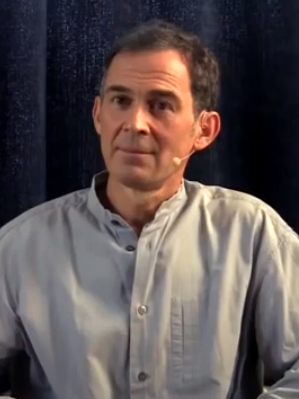
Rupert Spira's assertion, "To meditate is to recognize what is already aware," invites us to explore the profound nature of consciousness itself. This statement suggests that meditation is not merely a practice of quieting the mind or focusing on breath; rather, it is an invitation to acknowledge the awareness that underlies all experience. In a world often characterized by distraction and superficial engagement, this recognition holds the potential to transform our understanding of self and existence.
At its core, this quote challenges the conventional approach to meditation, which frequently emphasizes techniques and methods. Instead, Spira points us toward a deeper realization: that awareness is not something we need to cultivate or create; it is already present within us. This perspective shifts the focus from striving for a state of mindfulness to recognizing the inherent awareness that is our true nature. Such a shift can lead to profound insights about the self, the nature of reality, and our interconnectedness with all beings.
The image / the metaphor
The imagery in Spira's quote evokes a sense of awakening to something that has always been there, akin to uncovering a hidden treasure within ourselves. The verb "recognize" implies an act of unveiling rather than constructing; it suggests that awareness is not a distant goal but a fundamental aspect of our being. This felt sense of recognition can be likened to the experience of coming home after a long journey, where the familiar comforts of one's true self are rediscovered.
Diving deeper into this metaphor, we can see that meditation becomes a process of peeling away layers of distraction and misunderstanding. Just as an artist reveals the beauty of a sculpture hidden within a block of marble, so too does meditation allow us to uncover the clarity of our awareness. This process is not about adding something new to our experience but rather about removing the obscurations that prevent us from seeing what has always been present. In this light, meditation transforms into a gentle act of recognition rather than a rigorous discipline.
In the speaker's tradition
Rupert Spira's teachings are deeply rooted in the non-dual tradition, which emphasizes the unity of consciousness and the interconnectedness of all existence. Concepts such as *advaita* (non-duality) and *sunyata* (emptiness) resonate with the essence of Spira's quote, suggesting that the separation we perceive is an illusion. In this framework, recognizing our inherent awareness aligns with the practice of *kenosis*, or self-emptying, where one relinquishes the ego's grasp to reveal the true self that is always aware.
In the context of non-dual philosophy, we can draw parallels with the teachings of sages like Ramana Maharshi, who emphasized the importance of self-inquiry as a means to uncover the true nature of the self. His famous question, "Who am I?" serves as a catalyst for recognizing the awareness that is the foundation of our being. This inquiry aligns seamlessly with Spira's assertion, as both invite us to look beyond the surface of our thoughts and emotions to discover the unchanging awareness that lies beneath.
Living the teaching
Consider a modern scenario where this teaching can be applied: a busy professional overwhelmed by the demands of work and life. In the midst of deadlines and responsibilities, the individual may feel disconnected from their inner self, lost in the chaos of external expectations. By embracing Spira's insight, they can shift their approach to meditation, not as a means to escape the busyness but as a practice of recognizing the awareness that exists even amidst the noise. This recognition can lead to a profound sense of peace and clarity, allowing them to navigate their responsibilities with a renewed sense of purpose.
Another application of this teaching might arise in the context of a challenging relationship. When conflicts arise, it is easy to become entangled in emotions and reactive patterns. By remembering that awareness is always present, one can approach the situation with a sense of detachment and understanding. This recognition allows for a deeper connection with the other person, fostering compassion and empathy rather than defensiveness. In this way, the practice of recognizing awareness can transform not only our inner experience but also the quality of our relationships.
A reflection
As we contemplate Spira's profound statement, we are invited to ask ourselves: What does it mean to recognize the awareness that is already present within me? This question encourages a deeper exploration of our own consciousness and invites us to reflect on the moments when we feel most connected to our true selves. In this inquiry, we may discover that the journey of recognition is not a destination but an ongoing process of unfolding, revealing the richness of our inherent awareness.



Join the BrightStar Community
Stay connected with daily inspiration, event announcements, and community wisdom