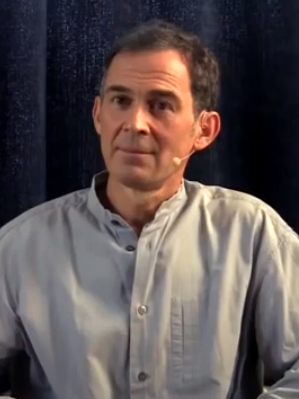
The Profound Simplicity of Awareness
Rupert Spira's assertion that "to be aware of being aware is the simplest, most direct meditation" invites us to explore the essence of consciousness itself. This statement distills the complex practice of meditation into a singular, accessible act: the recognition of our own awareness. In a world often filled with distractions and noise, this teaching serves as a gentle reminder that the path to inner peace and clarity lies not in elaborate rituals or techniques, but in the simple acknowledgment of our own existence and the awareness that accompanies it.
In a society that frequently equates busyness with productivity, Spira's words challenge us to reconsider what it means to engage in meditation. Rather than seeking to escape our thoughts or emotions, we are invited to turn our attention inward, to observe the very act of awareness itself. This shift in perspective is not merely a philosophical exercise; it has profound implications for how we live our daily lives, interact with others, and understand our place in the world. By embracing this direct approach to meditation, we can cultivate a deeper sense of presence and connection to ourselves and the universe.
The image / the metaphor
At its core, Spira's quote employs a strikingly simple yet profound imagery: the act of being aware of our own awareness. The verb "to be" suggests a state of existence that is both fundamental and essential, while "aware" implies a conscious recognition of that existence. This duality evokes a sense of clarity and immediacy, as if we are peeling back layers of complexity to reveal the pure essence of consciousness. The felt sense of this practice is one of gentle observation, where we step back from the incessant chatter of the mind and simply rest in the awareness that is always present.
Diving deeper into this metaphor, we can see that awareness is not a static state but a dynamic process. It invites us to engage with our thoughts, feelings, and sensations without judgment or attachment. In this way, being aware of being aware becomes a dance of consciousness, a fluid interplay between the observer and the observed. This metaphorical dance encourages us to embrace the richness of our experience, allowing us to witness the unfolding of life with a sense of curiosity and openness.
In the speaker's tradition
Rupert Spira's teachings are deeply rooted in the non-dual tradition, which emphasizes the interconnectedness of all existence and the recognition of the self as a manifestation of a greater whole. Concepts such as "sunyata," or emptiness, and "fana," or annihilation of the self, resonate with Spira's invitation to dissolve the boundaries of the ego and recognize the underlying awareness that unites us all. This perspective aligns with the idea of "kenosis," or self-emptying, where one relinquishes the need for control and allows for a more profound experience of being.
In the context of non-dual philosophy, Spira's quote can be compared to the teachings found in the works of Advaita Vedanta, particularly in the writings of sages like Ramana Maharshi. Maharshi often emphasized the importance of self-inquiry, urging seekers to ask, "Who am I?" This inquiry leads to a direct experience of awareness, echoing Spira's assertion that the simplest form of meditation is simply to be aware of our own awareness. Both teachings point to the same fundamental truth: that our true nature is not separate from the awareness that pervades all existence.
Living the teaching
Consider a modern scenario where this teaching can be applied: during a hectic day at work, when stress and distractions abound. Instead of succumbing to the chaos, one can take a moment to pause and simply breathe, directing attention inward to the awareness of being. This practice can transform a moment of overwhelm into an opportunity for clarity, allowing one to navigate challenges with a sense of calm and centeredness. By recognizing the awareness that exists beneath the surface of our thoughts and emotions, we can cultivate resilience and presence in the face of external pressures.
This teaching also finds resonance in our relationships. Imagine a moment of conflict with a loved one, where emotions run high and misunderstandings abound. By practicing awareness of awareness, we can step back from the immediate reactions and judgments that arise. Instead of becoming entangled in the drama, we can observe our feelings and thoughts with compassion, creating space for understanding and connection. This approach fosters deeper intimacy and communication, allowing relationships to flourish in the light of shared awareness.
A reflection
As we contemplate Spira's profound statement, we are invited to ask ourselves: What does it mean to be aware of my own awareness in this moment? This question encourages us to pause and reflect on our current state of being, inviting a deeper exploration of our consciousness. In doing so, we may uncover layers of understanding and connection that enrich our experience of life, guiding us toward a more profound sense of peace and presence.



Join the BrightStar Community
Stay connected with daily inspiration, event announcements, and community wisdom