Seeing the One Through Many Eyes
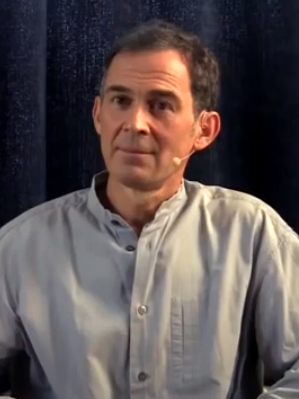
Rupert Spira's assertion that "All this complexity is just the same one thing, looking at itself from different angles" invites us to reconsider our perception of reality. In a world rife with division and multiplicity, this quote serves as a profound reminder of the underlying unity that binds all existence. It challenges us to look beyond the surface of our experiences and recognize the singular essence that permeates everything, urging us to explore the depths of consciousness and the nature of truth.
This perspective is not merely philosophical; it has practical implications for how we navigate our lives. By understanding that the myriad forms and experiences we encounter are expressions of a singular reality, we can cultivate a sense of compassion and interconnectedness. This realization can transform our relationships, our struggles, and our understanding of ourselves, leading us toward a more harmonious existence rooted in unity rather than separation.
The image / the metaphor
The imagery in Spira's quote evokes a kaleidoscope, where the same light refracts into countless patterns and colors. Each angle reveals a different facet of the same underlying reality, suggesting that our perceptions are shaped by the vantage points we occupy. The verbs "looking" and "seeing" imply an active engagement with our surroundings, encouraging us to explore the depths of our consciousness and the nature of our experiences.
In the speaker's tradition
Rupert Spira's insights are deeply rooted in the non-dual tradition, which emphasizes the unity of all existence. Concepts such as *advaita* (non-duality) and *sunyata* (emptiness) resonate with his assertion, suggesting that the apparent multiplicity of the world is an illusion. In this framework, the notion of *kenosis*, or self-emptying, becomes relevant, as it encourages us to let go of our preconceived notions and attachments to experience the underlying unity of consciousness.
In the context of non-dual teachings, we can draw parallels with texts such as the *Upanishads*, which articulate the idea that the individual self (Atman) is ultimately one with the universal consciousness (Brahman). This profound realization invites us to transcend the dualistic perceptions that often cloud our understanding, allowing us to see the interconnectedness of all things. By recognizing that we are all expressions of the same essence, we can cultivate a deeper sense of compassion and understanding in our lives.
Living the teaching
Consider a modern scenario where this teaching can be applied: a workplace conflict. Imagine two colleagues who have opposing views on a project. Instead of viewing each other as adversaries, they could approach the situation with the understanding that their differing perspectives are simply angles of the same reality. By engaging in open dialogue and seeking common ground, they can transform the conflict into a collaborative effort, recognizing that their shared goal is ultimately the same.
In a different context, this teaching can be particularly illuminating in personal relationships. When faced with a disagreement with a loved one, we often become entrenched in our viewpoints, failing to see the underlying unity that connects us. By remembering that both perspectives arise from the same essence, we can approach the situation with empathy and openness, allowing for a deeper connection and understanding. This practice of seeing the one through many eyes can foster harmony and love in our interactions.
A reflection
As we contemplate Spira's quote, we are invited to reflect on our own perceptions and experiences. How often do we find ourselves caught in the illusion of separation, overlooking the underlying unity that connects us all? In moments of complexity or conflict, how can we shift our perspective to recognize the shared essence that binds us together? This contemplation can guide us toward a deeper understanding of ourselves and our relationships, inviting us to embrace the richness of life while remaining anchored in the truth of our interconnectedness.



Join the BrightStar Community
Stay connected with daily inspiration, event announcements, and community wisdom