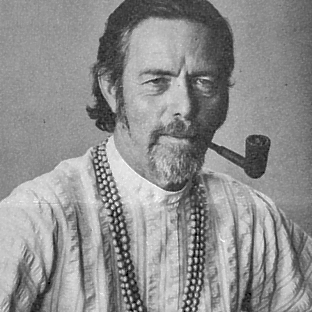
Finding Clarity in Stillness
Alan Watts once remarked, "Muddy water is best cleared by leaving it alone." This profound statement invites us to consider the nature of clarity and the often counterintuitive path to achieving it. In a world that constantly urges us to act, to intervene, and to solve problems immediately, Watts offers a refreshing perspective: sometimes, the most effective response is to step back and allow things to settle. This teaching resonates deeply in our fast-paced lives, where the noise of urgency often drowns out the wisdom of patience.
At its core, this quote speaks to the essence of non-doing, a principle that is central to many contemplative traditions, particularly Zen. It challenges our instinctual drive to control our circumstances and suggests that clarity emerges not through forceful action but through a gentle acceptance of the present moment. In a society that equates busyness with productivity, Watts’ insight serves as a reminder that true understanding often requires us to pause, breathe, and allow the chaos of our thoughts and emotions to settle like sediment in water.
The image / the metaphor
The imagery of "muddy water" evokes a visceral sense of confusion and obscurity. When we think of water clouded with mud, we can almost feel the heaviness of it, the way it obstructs our vision and creates a sense of disarray. The act of "leaving it alone" suggests a deliberate choice to refrain from stirring the waters further, allowing the natural process of sedimentation to occur. The verbs chosen here—"cleared" and "leaving"—imply a gentle, non-intrusive approach to clarity, contrasting sharply with the more aggressive tendencies of our modern lives.
Diving deeper into this metaphor, we can see that muddy water symbolizes the complexities of our thoughts, emotions, and situations. When faced with confusion or turmoil, our instinct may be to act swiftly, to intervene, or to force a resolution. However, Watts invites us to consider that clarity is not something we can impose; rather, it is a state that arises organically when we allow ourselves the space to simply be. This metaphor serves as a powerful reminder that sometimes, the best way to navigate life's murky waters is to trust in the natural unfolding of events.
In the speaker's tradition
Alan Watts was a prominent interpreter of Eastern philosophies for Western audiences, particularly Zen Buddhism. His teachings often reflect the concept of "wu wei," or effortless action, which aligns closely with the idea of non-doing. In Zen, there is a profound understanding that the universe operates in its own rhythm, and our attempts to control or manipulate it often lead to more confusion. The notion of "sunyata," or emptiness, also resonates here, as it suggests that clarity arises from a state of openness and acceptance rather than from clinging or striving.
In the context of Zen texts, we can draw parallels to the teachings found in the "Tao Te Ching," where Laozi emphasizes the importance of yielding and going with the flow of life. The text states, "The wise man does not strive for greatness, and thus he achieves it." This echoes Watts' sentiment that by stepping back and allowing the muddy waters of our lives to settle, we can access a deeper clarity that is often obscured by our frantic efforts to control our circumstances.
Living the teaching
Consider a modern scenario where this teaching might apply: a workplace filled with tension and unresolved conflicts. The instinctive response may be to hold meetings, to confront issues head-on, or to impose solutions. However, if we take a moment to step back and allow the situation to unfold, we might find that the tensions naturally dissipate over time. By creating a space for reflection and allowing individuals to process their feelings, clarity can emerge without the need for forceful intervention.
This principle can also be applied in personal relationships, particularly during moments of disagreement or misunderstanding. Instead of immediately reacting with defensiveness or the urge to "fix" the situation, we might choose to pause and allow the emotions to settle. By giving ourselves and our partners the grace of time, we create an opportunity for deeper understanding and connection. In this way, the practice of non-doing becomes a powerful tool for cultivating clarity and harmony in our interactions.
A reflection
As we contemplate Watts' wisdom, we might ask ourselves: What areas of my life feel muddied or unclear, and how might I practice the art of leaving them alone? This question invites us to reflect on our tendencies to rush into action and challenges us to consider the potential for clarity that lies in stillness. By embracing the practice of patience and non-doing, we open ourselves to the possibility of deeper insights and a more profound connection with the world around us.


Join the BrightStar Community
Stay connected with daily inspiration, event announcements, and community wisdom