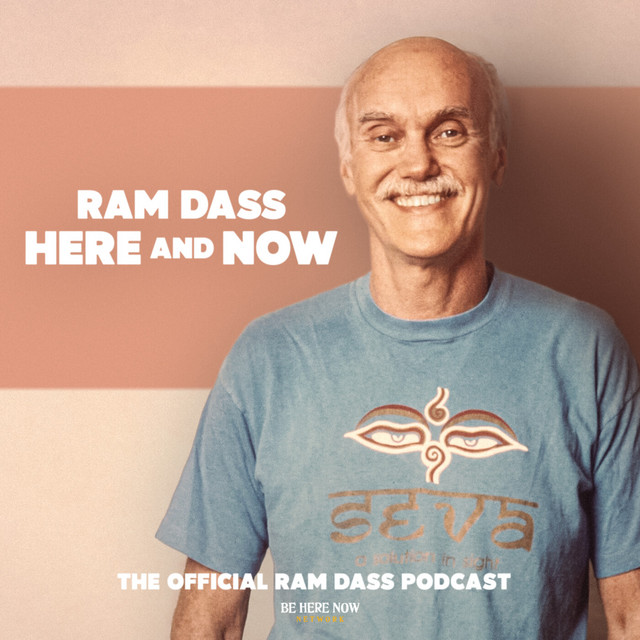
In a conversation with Daniel Goleman on the Here & Now Podcast, Ram Dass teaches that simplicity is not deprivation but liberation—a direct antidote to the complexity and overstimulation that pulls consciousness away from the present moment. Rather than viewing a simple life as sacrifice, he reframes it as a deliberate choice to reduce friction between intention and living, creating more room for awareness, connection, and spiritual maturation.
What Makes Simplicity Difficult in Modern Life?
The contemporary world is architected around complexity and accumulation. Consumer culture, digital platforms, and social comparison have made simplicity feel countercultural, even suspicious. People are taught that more is better: more possessions, more options, more stimulation, more choices. This bombardment of complexity creates a constant state of mental fragmentation—the mind is pulled in multiple directions, evaluating, wanting, comparing.
Ram Dass's teaching suggests that simplicity addresses this directly. By reducing the number of objects, commitments, and mental categories we maintain, we reduce the cognitive load required to manage daily life. This freed attention can then turn toward what matters: presence, awareness, and connection with others.
How Does Simplicity Connect to Spiritual Practice?
In traditional spiritual paths—whether Hindu, Buddhist, Christian monastic, or Sufi—simplicity has long been recognized as a discipline. Monks and nuns take vows of poverty not out of self-punishment but as a deliberate removal of distraction. When you own less, you think about possessions less. When you eat simply, meals become meditation rather than performance. When your schedule is uncluttered, you have space for deeper work.
Ram Dass teaches that simplicity is pragmatic: it's a tool for consciousness. The goal is not simplicity for its own sake, but simplicity as a means to inner clarity. By removing the noise of excess, we create conditions where awareness can deepen and the mind can settle into its natural state—what he might call presence or the "here and now" that the podcast's name references.
Why Is Simplicity Often Seen as Loss Rather Than Gain?
The mind habitually equates having with being. We've internalized the equation: more possessions = more identity, more status, more worth. Letting go of things triggers a subtle anxiety—am I becoming less if I own less? Will people respect me less?
Ram Dass's wisdom inverts this equation. True richness, he suggests, is measured in freedom, presence, and love—not in objects or status markers. A person living simply but consciously is, in his framework, wealthier than someone drowning in possessions but absent from their own life. The gain comes from what becomes available when the mind is no longer occupied with managing excess.
This is not asceticism born from shame or denial. It's a joyful recognition that simplicity itself can be a delight. The taste of simple food, the beauty of a bare room, the clarity that comes from an uncluttered schedule—these are pleasures that complexity obscures.
How Can Someone Begin to Practice Simplicity?
Simplicity doesn't require dramatic gesture. It begins with intention and honest observation. Where do you feel pulled in multiple directions? Where does complexity create friction in your life? Some natural entry points include:
- Physical space: Removing objects that no longer serve you. This is both practical and meditative—each decision to keep or release is an act of presence.
- Schedule: Saying no to commitments that don't align with your values. This is harder than object removal because it involves disappointing others, but it protects your attention.
- Diet: Eating fewer types of foods, or eating without distraction. This simplifies both preparation and consumption, making meals more present and nourishing.
- Digital life: Reducing notifications, unfollowing accounts that trigger comparison, limiting screen time. This is contemporary asceticism—protecting your mind from designed distraction.
The practice is gentle and gradual. There's no timeline. Ram Dass's teaching is not about achieving some perfect state of minimal living but about noticing when simplicity serves you and when complexity becomes burden.
What Is the Delight in Simplicity?
The podcast episode title—"The Delight of Simplicity"—is crucial. This is not a grim teaching about renunciation. Ram Dass is pointing toward actual happiness that arises when life becomes simpler. A person with few possessions but a quiet mind may experience more joy than someone surrounded by luxury but perpetually stressed.
This delight has several dimensions. First, there's the relief of released mental energy. When you stop managing excess, that energy becomes available for creativity, love, or spiritual practice. Second, there's the sensory clarity that simplicity brings. When you eat one simple meal, you taste it fully. When your space is spare, you notice light and space. When your schedule is open, you notice the present moment.
Third, simplicity often creates connection. Many people drawn to simple living report that it brings them closer to others—to community, to shared meals, to unhurried conversation. The complexity of individual accumulation is replaced by the richness of relationship.
How Does Simplicity Support the "Here and Now"?
Ram Dass's core teaching has always been about presence—being fully here, now, with what is. Simplicity serves this by removing the gravitational pull of the past (regret about what you've accumulated) and future (anxiety about maintaining or acquiring more). When your life is simple, your nervous system relaxes. When your nervous system is relaxed, presence becomes natural.
This is why simplicity and awakening often travel together in spiritual traditions. The mind cannot be fully present while managing the mental load of complexity. By simplifying the external world, we simplify the internal world, creating conditions where awareness can expand and deepen.
Is Simplicity a Luxury Only Some Can Afford?
This is a fair question. Not everyone has the freedom to dramatically simplify. Economic necessity, family responsibility, and health requirements sometimes require complexity. Ram Dass's teaching is not that everyone should live in poverty but that wherever you are, simplicity can be a direction—a principle applied proportionally.
Someone with limited income may already be practicing simplicity. Someone wealthy might intentionally choose to live simply as a spiritual practice. The teaching is about conscious choice, not circumstance. Even in complexity, you can notice areas where simplification is possible and see what opens up.
Where to Go From Here
If Ram Dass's teaching on simplicity resonates, the next step is direct observation. Notice where complexity creates friction in your own life. Choose one small area—a shelf, a time block, a digital habit—and experiment with simplification. Pay attention to what happens internally. Does your mind become quieter? Does presence become easier? Does joy emerge?
Simplicity is not a fixed destination but an ongoing practice of alignment. As you simplify, you learn what you actually need and what you thought you needed. Over time, you discover that the delight Ram Dass points to is not in the simplicity itself but in the freedom and awareness that simplicity makes possible. This is the real teaching: simplicity is a gateway, not a goal.