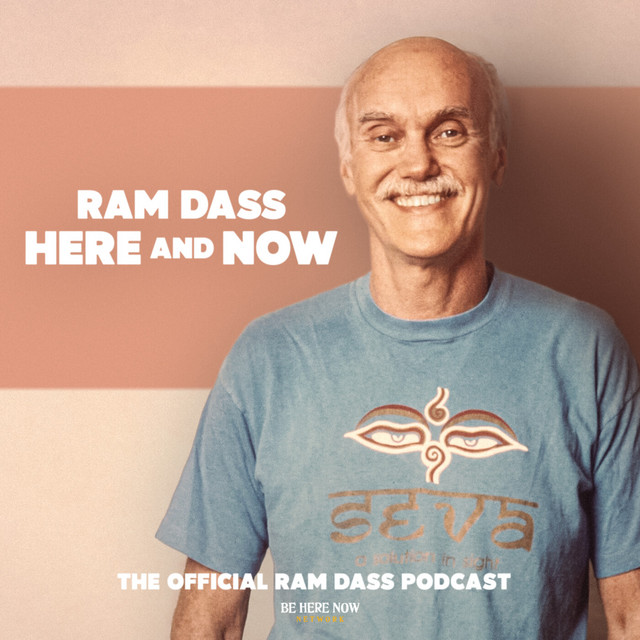
This 1987 talk explores the spiritual practice of loving people exactly as they are—not as we wish them to be—by learning to work skillfully with suffering and moving from reactive patterns toward responsive presence. The core teaching centers on accessing an intuitive "heart space" that remains open and compassionate even in difficulty, fundamentally transforming how we relate to others and ourselves.
What Does It Mean to Love People Just As They Are?
Loving people as they are is not sentimentality or blind acceptance of harm. Rather, it is a conscious practice of meeting others at their exact point of being, with their flaws, fears, limitations, and wholeness simultaneously visible. This approach requires releasing the ego's demand that people conform to our expectations, beliefs, or timeline for growth.
In this teaching, Ram Dass draws from decades of contemplative practice and encounter with spiritual teachers in India, where he observed how enlightened masters could hold complete acceptance of someone's humanity while simultaneously seeing their highest potential. This is not passive resignation but an active choice to see through the lens of compassion rather than judgment. When we love someone as they are, we create psychological and spiritual space for them to evolve naturally, without the defensive reactivity that arises when they feel condemned or misunderstood.
The practice begins with honest observation. Notice the person in front of you: their mannerisms, their pain, their gifts, their defensive patterns. Rather than immediately evaluating whether they meet your standards, pause. Ask yourself: what is true about them right now? What suffering are they carrying? What fear drives their behavior?
How Does Reactivity Different from Responsiveness?
Reactivity is the conditioned, automatic response that arises from our trauma, beliefs, and unexamined patterns. When someone triggers us—through a word, a gesture, a failure—we react from a place of protection, projection, or control. Reactivity is fast, defensive, and rooted in our personal wound.
Responsiveness, by contrast, arises from a slower, wiser place. It is the capacity to see what is actually happening in the moment, to perceive the other person's deeper need or pain, and to offer a reply that serves their growth and the relationship's integrity. A responsive person can hold boundaries while maintaining compassion. They can say "no" without cruelty or say "yes" without resentment.
The shift from reactive to responsive requires what Ram Dass calls "finding the intuitive heart space"—a place within consciousness where judgment, fear, and the personal self temporarily dissolve, leaving only clear seeing and love. In this space, you are not performing love or managing your image; you are accessing something larger than your conditioning.
Consider a practical example: Someone you care about repeatedly makes poor choices that affect you. The reactive response is anger, lectures, withdrawal, or manipulation ("If you loved me, you'd change"). The responsive approach might be: "I see you're struggling. I love you. I can't solve this for you, but I'm here. And I need to protect my own peace by stepping back." Responsiveness acknowledges reality while honoring both the other person's autonomy and your own boundaries.
Why Is Working With Suffering Central to This Practice?
Suffering is the gateway to both genuine compassion and authentic relationship. When we avoid or deny suffering—our own or others'—we stay in a surface relationship marked by small talk, performance, and hidden resentment. When we turn toward suffering with curiosity and compassion, we access something real.
Ram Dass's teaching here draws on the Buddhist and Hindu understanding that suffering (dukkha) is not punishment but information. Suffering reveals what we're attached to, what we believe we need to survive, and where our hearts are defended. For the person we're trying to love, their suffering is similarly informative. Their reactivity, their walls, their self-sabotage—these are not character flaws but protective mechanisms born of their own pain.
Working with suffering means:
- Not taking it personally. The other person's pain, anger, or withdrawal is not about you, even if directed at you. It is about their relationship with their own wounds.
- Not trying to fix it. The urge to "make it better" often comes from our own discomfort with their pain, not from genuine service. Sometimes the most loving thing is to sit with someone in their suffering without trying to manipulate it away.
- Not spiritualizing it. Phrases like "Everything happens for a reason" or "This is your karma" can bypass real pain and prevent genuine healing. Acknowledge the suffering as real before you contextualize it spiritually.
- Meeting it with presence. Your calm, open presence in the face of someone's difficulty is itself therapeutic. It signals that their pain is not too much for you, that they will not be abandoned in it.
What Is the "Intuitive Heart Space" and How Do You Access It?
The intuitive heart space is a state of consciousness in which you are aware, compassionate, and clear without the filter of your personal fears and preferences. It is not a feeling, though it may generate feelings of warmth or expansion. It is a perceptual capacity—the ability to see what is truly happening and what is truly needed, separate from what your ego wants.
In meditation and contemplative traditions, this space is accessed through relaxation of the separate self. When the mind quiets and the defensive posture softens, awareness naturally opens to a larger, less contracted perspective. In the moment with another person, you access it through a simple shift: Stop trying to control the interaction. Stop protecting your image. Stop planning your response while they're still talking. Drop your shoulders. Feel your feet on the ground. Notice what you feel in your chest without naming it.
Ram Dass emphasizes that this space is not rare or exotic. You've inhabited it before—in moments of genuine connection, when someone's eyes met yours and you both felt truly seen. In the presence of a dying person, when pretense falls away. In the grip of awe in nature, when the separate self momentarily dissolves. The practice is learning to access it consciously and repeatedly, not waiting for a crisis.
To practice:
- Before a difficult conversation, take three deep breaths and consciously relax your jaw, shoulders, and belly.
- Place your attention in the center of your chest, in the heart space, rather than in your thinking mind.
- Ask silently: "What does this person need from me right now?" and listen for the answer that arises, not from your thoughts but from your intuitive knowing.
- Speak or act from that knowing rather than from your strategy.
This is not about becoming passive or losing your discernment. A responsive person with an open heart can still say "I disagree," "That behavior is not acceptable," or "I need to leave this relationship." The difference is that these statements emerge from clarity and care, not from defensiveness or punishment.
How Does This Apply to Long-Term Relationships and Family?
The most difficult context for this practice is with family and long-term partners, where years of patterns, unmet expectations, and stored resentments live. With a stranger or new friend, it is easier to see their wholeness because we have no history to cloud our perception.
With a parent, sibling, spouse, or child, reactivity is almost automatic. The parent who always criticized triggers shame. The sibling who betrayed triggers anger. The partner who withdrew triggers abandonment fear. These are not small psychological glitches but deep, neurological grooves carved by repetition.
The practice here requires patience with yourself as well as with the other person. You will fail. You will react. You will say things you regret. This is not a failure of the practice; it is the practice showing you where you are still defended.
The path forward is accountability without self-hate. When you react, notice it. Take responsibility for it. Apologize if needed. And then return to practice—returning to the heart space, returning to the intention to love this person as they are, returning again and again.
Over time, something shifts. The person in front of you begins to relax, because they feel less judged. As they relax, you relax. As both of you relax, the defensive patterns that perpetuate old pain begin to dissolve. Not because the other person changed, but because you changed how you meet them.
What About Boundaries and Protecting Yourself?
A common misunderstanding is that loving people as they are means accepting all behavior toward you. This is confusing love with codependency. Loving someone and removing yourself from their abuse are not contradictory.
A responsive person can see someone's pain clearly and still say: "I love you, and I cannot be in relationship with you under these conditions." This statement is more honest and more loving than staying in a situation where resentment grows.
Boundaries emerge not from hardness but from self-love and clarity. When you love yourself as you are—including your limits, your needs, your dignity—you naturally protect that. And when you protect it from a place of wholeness rather than fear, you often do so in a way the other person can hear.
Where to Go from Here
Begin with one relationship: a family member, friend, or colleague with whom you struggle. For one week, practice the shift from reactivity to responsiveness. Before an interaction, center yourself in the heart space. Notice when you feel the urge to defend, control, or critique, and pause. Ask: What is actually true here? What does this person need? Speak from your answer rather than from your impulse.
Notice what happens. Notice whether the other person begins to open or relax. Notice whether you feel less exhausted after interactions. These are signs that you're touching something real.
This is not about becoming a spiritual saint. It is about becoming more sane, more awake, and more capable of genuine connection. It is about discovering that love is not something you have to manufacture or deserve—it is the ground of being itself, available whenever you relax enough to access it.