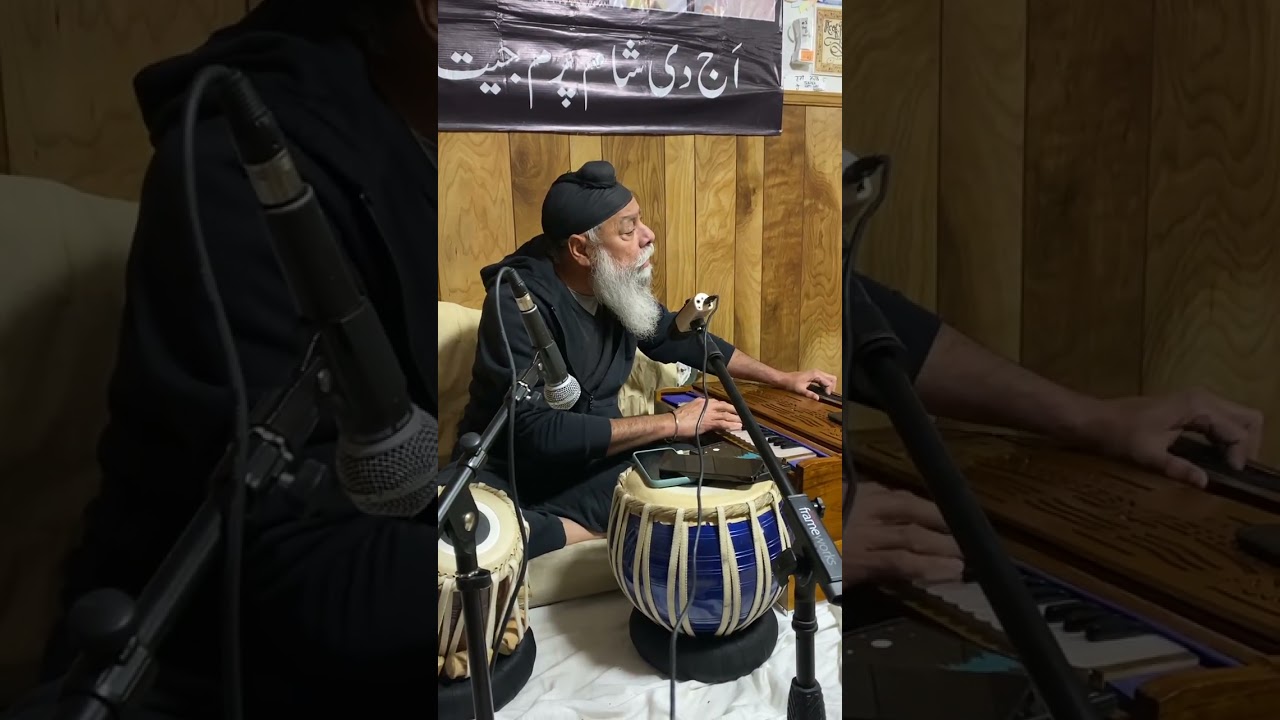
TLDR: "Tere Bharose" is a Punjabi devotional phrase that translates as "I trust in You" or "in Your care," expressing reliance on divine support through life's difficulties. Professor Paramjeet Singh explores this concept as both a spiritual practice and a practical framework for navigating uncertainty, fear, and loss while maintaining faith in a higher power's guidance. The teaching emphasizes how this form of surrender is not passive resignation but active trust in a process greater than individual effort alone.
What Does "Tere Bharose" Mean?
"Tere Bharose" (ਤੇਰੇ ਭਰੋਸੇ) is a foundational phrase in Punjabi spiritual language, particularly within Sikh and Hindu devotional traditions. The term literally translates to "in Your trust" or "upon Your care." It expresses the act of placing one's complete reliance on the divine—whether understood as God, universal consciousness, or a higher order of existence. The phrase encapsulates a surrender that is both emotional and philosophical, rooted in the recognition that individual human effort, while necessary, is ultimately supported by forces beyond personal control.
This is not a passive or fatalistic concept, despite how surrender language sometimes appears in Western contexts. Rather, "Tere Bharose" represents an active choice to align one's will with a larger intelligence. A person who acts from this frame does their work, takes responsibility, and remains engaged—but holds the outcome lightly, trusting that the universe will provide what is needed when it is needed.
How Does Trust in the Divine Address Fear?
One of the primary functions of "Tere Bharose" practice is to address existential fear—the anxiety that arises when we confront loss, uncertainty, or the limits of our control. When someone practices this form of trust, they gradually recognize patterns in their own life: moments when circumstances worked out despite doubt, times when help arrived unexpectedly, situations that seemed impossible but resolved through means they could not have predicted.
The teaching is that fear contracts consciousness and limits perception. When we are afraid, we become rigidly attached to controlling outcomes, and this attachment often blinds us to solutions and support that are available. By consciously placing trust in divine care, practitioners create psychological and spiritual space for intuition, synchronicity, and guidance to operate. The nervous system shifts from fight-or-flight into a state where deeper knowing can emerge.
This doesn't mean that fear disappears entirely—rather, it is held within a larger container of faith. Difficult emotions still arise, but they are no longer the sole arbiter of action or belief.
What Is the Relationship Between Effort and Trust?
A common misunderstanding is that trusting in divine support means abandoning personal effort or responsibility. The opposite is true. "Tere Bharose" as taught in Punjabi and Sikh contexts operates within a framework where human action and divine grace are complementary, not contradictory. The individual is expected to act with full intelligence, skill, and dedication—to do their part with integrity and commitment. Simultaneously, they hold the outcome in trust, recognizing that success depends on factors beyond their command.
This balance prevents two equally limiting extremes: on one hand, the exhaustion and despair that comes from believing everything depends on your effort alone; on the other, the passivity that comes from believing nothing you do matters. Instead, "Tere Bharose" invites a middle path where you give your best while remaining flexible about how results manifest.
How Does This Practice Relate to Surrender?
Surrender in the "Tere Bharose" framework is not about giving up or accepting injustice. It is about releasing the illusion that you can control everything and acknowledging the intelligence within the unfolding of events. When circumstances do not go as planned, the practice invites you to ask: "What is this teaching me? What am I being asked to learn or release? How might this apparent setback be serving a larger purpose?"
This reframe is powerful because it transforms suffering from meaningless pain into a vehicle for growth and understanding. Loss, delay, and apparent failure become information rather than proof of inadequacy. Over time, practitioners often report that they can recognize the hand of something larger working through their lives, shaping them in ways their conscious mind could not have orchestrated.
Why Is This Teaching Relevant Today?
In contemporary life, the temptation to control outcomes has only intensified. Technology, metrics, and data create an illusion that everything can be measured and optimized. Yet uncertainty—about health, relationships, livelihood, meaning—remains inescapable. "Tere Bharose" offers an antidote not through denial of difficulty, but through a shift in orientation.
The practice acknowledges that uncertainty is the actual texture of existence. Rather than fighting this reality, practitioners work with it. They develop resilience not through becoming harder or more defended, but through deepening their capacity to trust. This creates a paradox: the less you need to control, the more effective and peaceful you become. The more you can hold lightly, the more you can actually respond appropriately to what each moment requires.
Where to go from here
To engage with "Tere Bharose" as a living practice, begin by noticing moments when you have been supported beyond your expectation or understanding. Reflect on times when what you feared did not materialize, or when help came from an unexpected direction. These are not coincidences—they are invitations to deepen trust. When anxiety or the need to control arises, pause and consciously place that concern in divine care. Say the words, inwardly or aloud: "Tere Bharose, I trust in You." Notice what shifts in your body, your thoughts, your sense of what is possible. Over time, this simple act rewires your nervous system toward faith, opening you to the intelligence that is always supporting your path.